Why Recovery Care Is an Investment, Not an Expense
The treatment bill was visible. The bigger loss was not. Most farmers calculate the cost of treatment carefully — but very few calculate what happens after treatment ends.
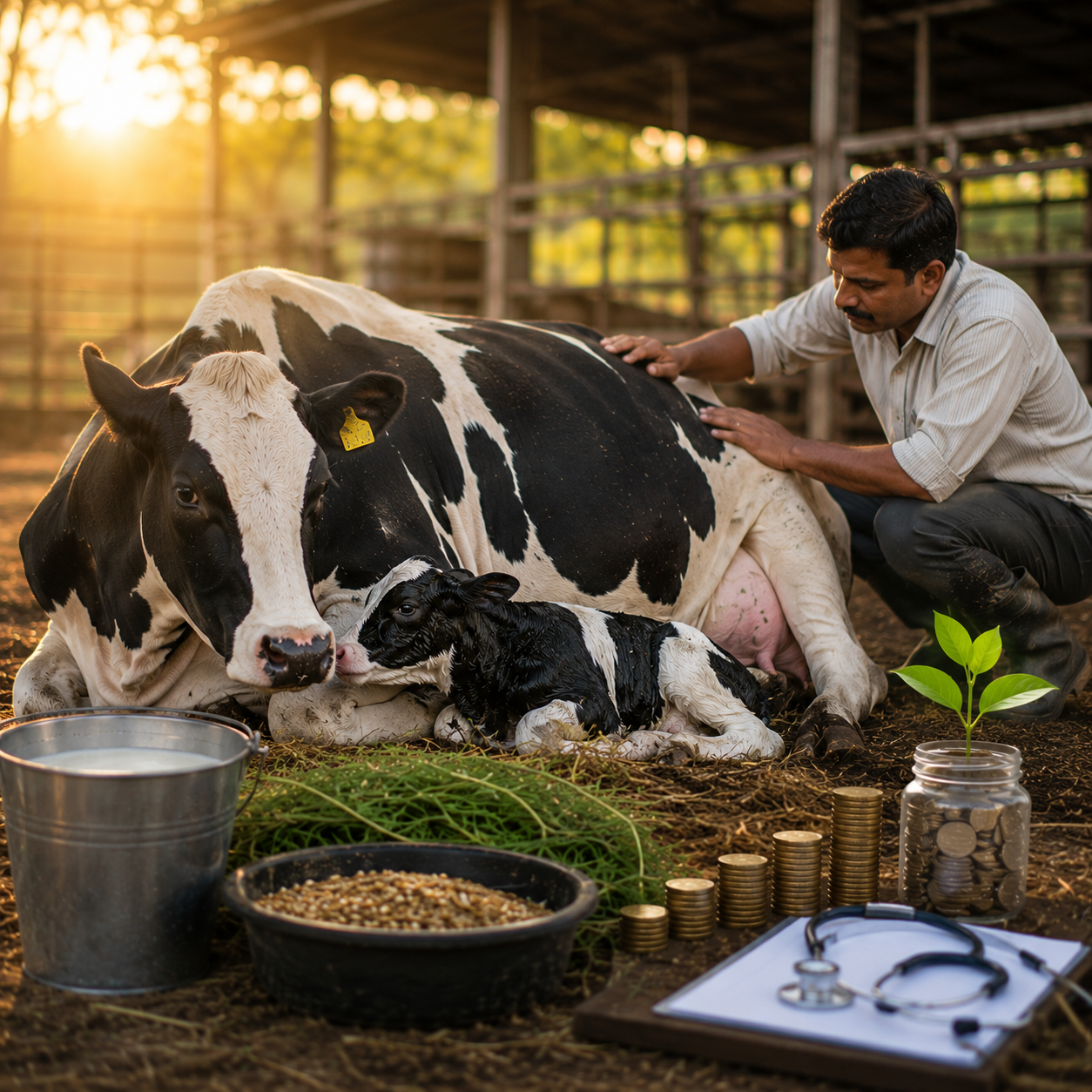
The Cost Farmers Don't Calculate
Imagine spending ₹8,000 treating a sick cow. The treatment is successful. The fever disappears. She starts eating again. Everything looks normal.
But if that cow produces just 2 litres less milk every day, at ₹40 per litre, that is nearly ₹29,000 in lost income over a year. And that is before considering delayed breeding, repeat illnesses, reduced feed efficiency, and lower lifetime productivity.
The Visible Cost vs. The Hidden Loss
When a cow falls sick, farmers watch one number: the treatment bill. But the hidden losses that follow are often far larger:
- Reduced milk production for weeks or months
- Delayed breeding and longer calving intervals
- Increased risk of repeat illness
- Lower feed efficiency and body condition
- Higher long-term veterinary expenses
In many cases, the financial loss caused by incomplete recovery can exceed the original treatment cost.
Looking Beyond the Treatment Bill
Recovery is not simply about helping an animal survive. It is about helping the animal return to full productivity. When recovery is incomplete, hidden losses continue long after the medicines have stopped.
Supporting recovery helps restore energy, immunity, mineral balance, and overall body function — giving the animal the best chance to perform at its full potential.
What Complete Recovery Protects
For farmers, complete recovery means:
- ✓ Better milk production
- ✓ Improved fertility
- ✓ Fewer repeat illnesses
- ✓ Lower long-term veterinary expenses
- ✓ Higher profitability
Recovery is not an additional cost. It is an investment in future performance.
The Cheapest Decision Is Not Always the Most Profitable
Many farmers focus on the cost of treatment because it is easy to measure. The real challenge is the hidden cost of incomplete recovery — lost milk, delayed conception, weaker immunity, and reduced productivity. By investing in recovery today, farmers can avoid much larger losses tomorrow.
Ask Your Veterinarian
After treatment, ask:
- Has my animal fully regained its strength and body condition?
- Is additional nutritional or mineral support needed?
- Has milk production returned to normal?
- Are there signs that recovery is still incomplete?
- What can I do today to prevent future losses?
Every Rupee Invested in Complete Recovery Has the Potential to Protect Many More in Future Productivity.
Related Keywords: