Why Does Milk Production Drop Even After Treatment?
The fever disappeared. She started eating. Everything seemed normal. But the milk can told a different story. Understanding the hidden recovery gap is the first step to protecting your farm's income.
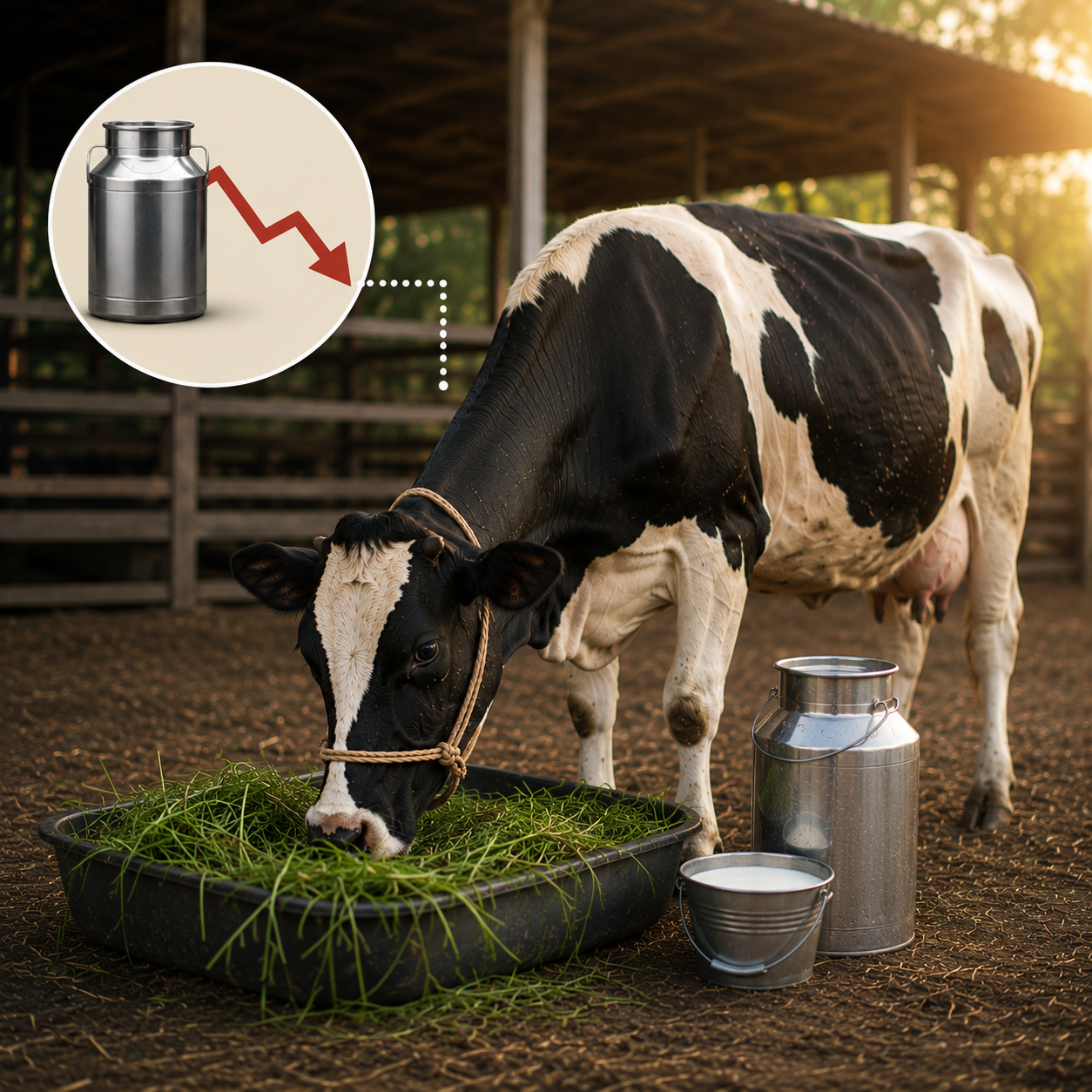
Treatment Ends. Recovery Does Not.
Treatment removes the disease. But recovery rebuilds the animal. During illness, a cow uses enormous amounts of energy, minerals, and immune reserves. Even after the fever disappears, the body continues rebuilding itself internally.
That is why an animal may look healthy while still recovering. The absence of symptoms is not the same as complete recovery.
The Hidden Cost of Incomplete Recovery
If your cow gives just 2 litres less milk every day, at ₹40 per litre, that is:
- → ₹80 every day
- → ₹2,400 every month
- → Nearly ₹29,000 every year
And that is before accounting for delayed breeding, repeat illness, and lower long-term productivity. Sometimes, the biggest cost of illness is not the treatment — it is the income quietly lost after treatment ends.
What Illness Takes Away
During illness, the body prioritises survival. This means important reserves are depleted:
- Energy reserves used to fight infection
- Key minerals lost through fever and stress
- Immune cells consumed battling the disease
- Gut health and feed efficiency reduced
- Metabolic function disrupted
Milk production depends on all of these systems working together. When they are depleted, production drops — even after the disease is gone.
The Recovery Gap
At PhytoCraft, we call this The Recovery Gap — the period between successful treatment and complete recovery. During this time, the animal may look fine but still be rebuilding energy, immunity, mineral balance, and metabolism.
Without proper support during this phase, the gap remains. And the farm continues losing income silently.
Recovery Is an Investment
Supporting complete recovery protects:
- ✓ Future milk production
- ✓ Fertility and conception rates
- ✓ Herd immunity and resilience
- ✓ Long-term farm profitability
The smartest investment is not just treating disease. It is preventing the losses that follow it.
Ask Your Veterinarian
Before considering recovery complete, ask:
- Has milk production returned to normal?
- Does the animal need nutritional or mineral support?
- Is she ready for breeding?
- Are there signs of incomplete recovery?
Treatment Saves the Animal. Complete Recovery Protects Its Potential.
Related Keywords: